
Fellows, Researchers, and Assistants
Andrew Bernstein
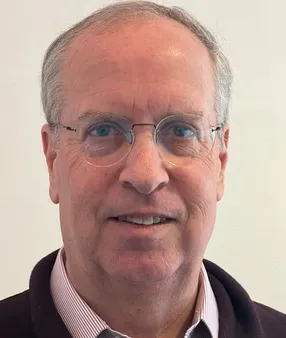
Andrew Bernstein is an international lawyer whose practice focuses on transactions and disputes for sovereign clients involving extractive industries and financings, as well as international capital markets transactions. He is Senior Counsel at Cleary Gottlieb Steen & Hamilton LLP, resident in Paris. His experience includes representing the Republic of Iraq in transactions to capture and utilize associated gas, upstream hydrocarbon projects international bond offerings, and disputes. He has also represented the Republic of Lebanon in offshore gas licensing and debt restructuring, the Republic of Senegal in offshore oil and gas transactions and intergovernmental agreements, the Republic of Slovenia in debt restructuring and financing transactions, and the Russian Federation and Bolivarian Republic of Venezuela (in each case prior to the current regimes) in hydrocarbon transactions, financings, and international disputes. He has also worked for major French banks and companies on international capital markets transactions for more than 25 years. He is a member of the Haut Comité Juridique de la Place Financière de Paris (High Paris Market Financial Markets Law Committee), a former member of the Wolters Kluwer Securities Market Advisory Board, and a Visiting Lecturer at Université Saint-Joseph in Beirut. He has an A.B. degree from Harvard College and a J.D. degree from Columbia Law School, and is a member of the New York and Paris bars.
Paul DeNoon

Paul DeNoon is a Senior Advisor to the Columbia Climate School, which he joined after a 35-year career as an analyst, portfolio manager, and leader in corporate responsibility in the asset management industry. He has witnessed the good, bad, and ugly of the financial markets. At the Climate School he works on creating pro-active training engagements with the private sector around the why, what, and how of addressing climate change. Additionally, he researches and lectures on net-zero, the carbon markets, and climate finance. He wants to inject healthy skepticism into the debate on how financial markets can help address the climate emergency. During a 28-year career at Alliance Bernstein, he built the firm’s efforts in emerging market debt and lead a team that invested in all sectors of the global fixed-income market. After being named to the firm’s first Partner Class, he was asked to oversee the firmwide efforts in corporate responsibility, including Diversity & Inclusion, responsible investing, and corporate philanthropy. In that role he played an instrumental part in creating the partnership between Columbia and Alliance Bernstein, which lead to his former firm becoming a founding supporter of the Climate School. He received a BA in Economics from Union College and MBA from the New York University Stern School of Business.
Ahmed Ihab Gamaleldin
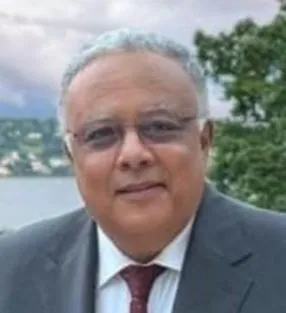
Ahmed Ihab Gamaleldin’s professional experience covers a wide range of thematic areas, interests, and positions related to diplomacy, sustainability, green transition, development, economics, private sector development, climate change, human rights, policy-making, and strategic planning. As a former Egyptian diplomat, he has gained rich and diversified experiences at the multilateral, regional, and bilateral levels throughout his 36-year diplomatic career. He worked in various capacities in the Egyptian Ministry of Foreign Affairs, including as Assistant Minister for Human Rights and International Humanitarian and Social Affairs, as Deputy Assistant Minister for Environment and Sustainable development, as Ambassador to the Kingdom of Morocco and as Permanent Representative of Egypt to the United Nations, the WTO and Other International Organizations in Geneva. He assumed a pivotal role in numerous international and regional processes and spearheaded several multilateral negotiations through his election as chair of these negotiations that covered the areas of sustainable development, human rights, humanitarian and social issues, environment and climate change, and disarmament. He also led national delegations to numerous international and regional meetings. In addition, he presided over the Conference on Disarmament in the United Nations in Geneva. At the national policy-making level, he has vast experience in interacting and building partnerships with national stakeholders, including civil servants, parliamentarians, the private sector, and civil society. One of his institution-building achievements was founding the first Supreme Standing Committee for Human Rights and its Technical Secretariat and being its first Secretary General, and leading the elaboration of the first ever “National Strategy for Human Rights 2021-2026.” Furthermore, he has also worked as a consultant to international economic institutions. He holds a PhD in International Economics and International Relations (1996) and a Master of Arts in International Relations (1991) With Distinction from Johns Hopkins University, USA, in addition to a Master of Business Administration (1989) and a Bachelor of Arts in Business Administration (1986) with High Honors from the American University in Cairo, Egypt.
Robert Ginsburg
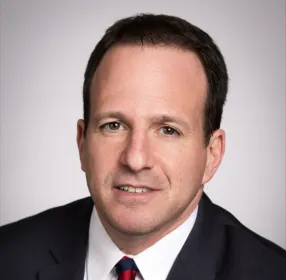
Robert Ginsburg is a writer for Forbes and a Professor of Global Strategy and Global Business Law at Hult International Business School. He writes about international business and the intersection of politics, law, and technology. His scholarly works have been published in The Journal of World Investment and Trade, Georgetown Journal of International Law, and Northwestern Journal of International Law and Business. Since 2000, he has advised and represented host governments in foreign direct investment and trade projects. Before becoming a full-time professor, he was an attorney focusing on international arbitration at a Magic Circle Law Firm and a clerk for the US Department of State- Office of Legal Adviser.
Luke Hatton

Luke Hatton is a PhD researcher based across Imperial College London's Grantham Institute and Centre for Environmental Policy. His work focuses on assessing the barriers to the flows of energy investment towards developing countries and improving their depiction in energy systems models. He leads the UK FCDO-funded Climate Compatible Growth program's modelling efforts on cost of capital for energy technologies and has been involved with projects in Zambia and South Africa. He works with the Energy Investment Unit of the International Energy Agency as an independent consultant, including co-leading on their cost of capital, sources of finance and energy R&D spending workstreams. He has also worked directly with a number of other international organizations on energy transition topics, including IRENA, UNIDO, and the World Bank. He received a MEng in Engineering Science from the University of Oxford and is currently finishing up his PhD in Energy Economics at Imperial College London, where he is a member of the Grantham Institute's Science and Solutions for a Changing Planet program.
Denise Hearn

Denise Hearn is an author, applied researcher, and advisor whose work focuses on economic and climate policy, market governance, and institutional design. With experience spanning public policy, finance, academia, and nonprofits, she enjoys translating complex systems problems into actionable solutions across sectors. She is co-author of The Myth of Capitalism: Monopolies and the Death of Competition – named a Financial Times’ Best Book of 2018 – and The Big Fix: How Companies Capture Markets and Harm Canadians (McGill 2024). Her research and analysis have reached global audiences through translations into 12 languages and publications in The Financial Times, Bloomberg, The Globe and Mail, Stanford Social Innovation Review, Fortune, The South China Morning Post, UnHerd, and The Washington Post. She has delivered keynote presentations and participated in policy discussions across continents. She has an MBA from the Oxford Saïd Business School and a BA in International Studies from Baylor University.
Lise Johnson

Lise Johnson specializes in international investment law and policy, and focuses on how it impacts sustainable development outcomes. She serves as Counsel at Curtis, Mallet-Prevost, Colt & Mosle LLP. From 2012 to 2021, she headed the Columbia Center on Sustainable Investment's work on investment law and policy. Her work at CCSI centered on analyzing the contractual, legislative, and international legal frameworks governing international investment, and shaping the impacts that those investments have on sustainable development objectives. She has a B.A. from Yale University, J.D. from University of Arizona, LL.M. from Columbia Law School, and is admitted to the bar in California.
Mouhamadou Kane

Mouhamadou Kane is an international lawyer, banker and development finance practitioner whose research and practice focuses on the intersections between law and development, public policy and development finance. His experience includes working for more than a decade at the Islamic Development Bank, were he participated in over thirty multi-million dollars developmental projects in about 25 countries in sub-Saharan Africa, Central Asia and the Middle-East and North Africa. He currently assists the Organization of Islamic Cooperation in establishing a permanent investment dispute settlement organ and leads the process towards the adoption of a dispute settlement protocol by the Council of Foreign Ministers. Previously, he worked as an Assistant Professor of law at the University of Cergy-Pontoise in Paris, as Research Scholar with the university’s Research Center on Public and Private International Law and as legal consultant for the Geneva-based International Trade Centre (ITC). He is a former visiting researcher at Saint-Louis University’s Center for International and Comparative Law in Missouri, a former Hubert Humphrey Leadership Fellow at Boston University (BU), and a former Research Fellow with BU Global Development Policy Center’s Global Economic Governance Initiative (GEGI). He is the Founding Executive Director of the African Center of International Law Practice (ACILP), a Senegal-based think-tank that helps African countries bridge the gap between international law and public policy. His most recent publications include authoring chapters in the 2017 and 2018 editions of the Yearbook on International Investment Law & Policy and collaborating in the book entitled: “Rethinking International Investment Governance: Principles for the 21st Century” (2018). He holds a Ph.D in law from Cergy-Pontoise University and an MPA from the London School of Economics and Political Science (LSE).
Leila Kazemi

Leila Kazemi is a political economist and governance expert who has been leading CCSI's work on the Politics of Extractive Industries, a multi-year project grappling with the ways in which power, interests, incentives, and characteristics of political systems shape how extractive industry projects are developed, their ultimate outcomes, and the fate of governance interventions designed to improve these. The goal of the project is to help advance more politically-informed and impactful work on extractives governance. Prior to that, as a long-time consultant, she provided research, analysis, policy advice, and program development support on issues pertaining to the governance of extractive industries, business and human rights, and human rights and development to a range of organizations including the World Bank, Natural Resource Governance Institute, Ford Foundation, Social Science Research Council, Foundation for the UN Global Compact, Purpose, and the Carbon War Room. She holds a Master's degree from the London School of Economics and received her Doctorate in Political Science in 2010 from Columbia University, where her research focused on the relationship between the governance of foreign investments and host state sovereignty.
Allan Marks
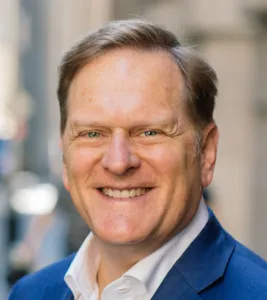
Allan Marks is a retired partner at Milbank LLP, where he practiced for over 30 years and was a partner in the firm’s Global Project, Energy & Infrastructure Finance group. He handled complex transactions in the United States, Canada, Latin America, Asia, and Europe with an aggregate value of over $100 billion across multiple sectors: power and renewable energy, transportation, water supply and water treatment, airports, rail, port terminals, alternative fuels, social infrastructure, and telecommunications and digital infrastructure. Many of his transactions focused on the energy transition, renewable energy, innovative clean technologies, and sustainability. He teaches law and finance at both the University of California, Berkeley and UCLA and is a Contributor to Forbes. He speaks frequently on energy, infrastructure, climate change, business strategy, financial markets, public policy, and international transactions, and he has been interviewed and quoted in The New York Times, Los Angeles Times, POLITICO Pro, CNN Business, Bloomberg, S&P Global Market Intelligence, and other media outlets. He was for 11 years the founding co-chair of the State Bar of California’s Subsection on Public-Private Infrastructure. He is a member of the Pacific Council on International Policy, participated as a UN-credentialed delegate at the COP27 climate change conference in Egypt, was the legal/regulatory specialist on a USAID team advising on energy sector reforms in India, and earlier interned at UNIDO’s Special Advisory Group on Energy in Vienna and served as a legislative aide to a member of the US Congress. He received a BA in International Studies from Johns Hopkins University and a JD from the University of California, Berkeley School of Law.
Tom Mitro
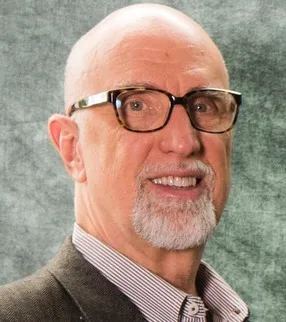
Tom Mitro is Co-Founder of the Graduate Certificate in Global Energy, Development and Sustainability at the University of Houston. He has 49 years of experience in management, consulting and teaching all aspects of petroleum financial, commercial, and government-related activities, working and living in six countries. For the last 18 years he has been an advisor and trainer for governments, NGO’s, and national companies in Angola, Tanzania, Nigeria, Congo, Mozambique, Guyana, Vietnam, and Canada on commercial, fiscal, decision analysis, governance, and economic modeling topics. Previously, he worked for 30 years for Gulf Oil and Chevron in several senior management positions living in Nigeria, Angola, Papua New Guinea, UK, and Australia. He served as regional Chief Financial Officer for Southern Africa and for Europe with responsibility for managing taxes and fiscal terms, economic evaluations, accounting, compliance, strategic planning, local business development, joint venture management, contracting and procurement, and financing. He has led numerous commercial and government negotiations ranging from tax disputes, LNG agreements, major asset transactions, oil entitlement claims, financing arrangements and joint venture disputes to PSA interpretations and sale and purchase agreements. Since 2014 he has been assisting the Columbia Center on Sustainable Investment as a Senior Fellow reviewing and writing policy documents, instructing extractive courses and co-authoring CCSI’s open fiscal model for natural gas upstream, pipeline and LNG developments. He is also co-founder of Indego Africa, an NGO that has been helping provide business management training and expanded market access for groups of women in Rwanda since 2007 and in Ghana since 2015. He holds B.S. in Business Administration and M.A. in Economics degrees from Duquesne University in Pittsburgh, USA.
Darius Nassiry
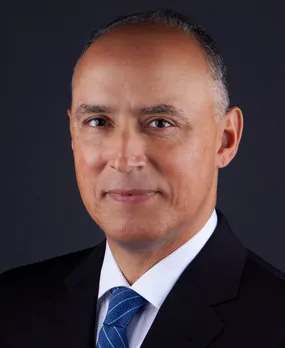
Darius Nassiry is an expert in sustainable finance and investment, energy transition finance, Paris
Agreement alignment, and climate risk reporting and disclosure. He is an experienced climate change and sustainable finance team leader with expertise in clean energy, project preparation, and climate finance and technology research. He has also worked on renewable energy, infrastructure finance, and investment banking in developing and emerging markets. He has a track record in climate investment and technology research, investment origination, project preparation, and start-up program design and implementation. He previously worked with the Department of Energy Advanced Research Projects Agency–Energy (ARPA-E), the Rocky Mountain Institute (RMI), the Overseas Development Institute (ODI) and the Center for Global Development (CGD). He has also advised the Asian Development Bank (ADB), Climate Bonds Initiative, and the German development agency (GIZ). He served as advisor to the Director-General and head of international cooperation at the Global Green Growth Institute (GGGI) and led country teams at the Millennium Challenge Corporation (MCC). Earlier in his career he worked as an investment banker in energy and utilities. He has lived and worked in the U.S., UK, Mexico, Kenya, Norway, Sweden, South Korea, and Japan.
Carlo Papa
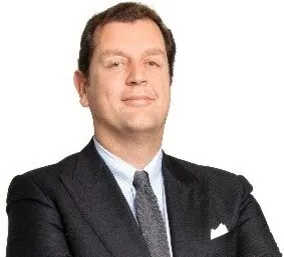
Carlo Papa is an international expert and strategic advisor in energy and finance with a focus on innovation, climate, and sustainability. He serves as Impact Advisory Board Member in SACE, the official Italian Export Credit Agency (ECA), supporting strategic planning, positioning, and operation to integrate ESG framework into project development, delivery, and reporting. He is a regular lecturer for courses at ISPI, IRENA, and Strathmore University among other institutions and contributor to scientific journals such as Applied Energy, Journal of Advanced Transportation, Oxford Institute for Energy Studies. He co-authored the first G20 Climate Atlas, Hybrid Metrics: Connecting Shared Value to Shareholder Value and WMO State of Climate Services: Energy. He initiated Open African Power program, co-lead by Sustainable Energy for All, participated in the Global Commission to End Energy Poverty, and co-founded the African School of Regulation. He holds a PhD in Management Engineering, the TRIUM Global Executive MBA, and a certificate in Climate Change and Energy from Harvard University Kennedy School. He is actively involved in think-tank activities as a member of the Aspen Institute, the German Marshall Fund of United States, Chatman House, the UN Council of Engineers for the Energy Transition, and the Italian Society for Climate Sciences.
Mauricio Rodas
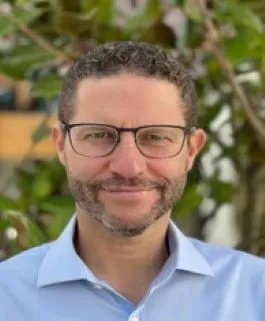
Mauricio Rodas served as Mayor of Quito, Ecuador (2014–2019), where he successfully led the construction of the country's first Metro line and implemented numerous initiatives to promote urban sustainability, social equity, and economic development. He hosted the UN Habitat III Conference and held leadership positions in global city networks, including World Co-President of UCLG and Vice-Chair of C40 Cities. Currently, he is a Visiting Professor at the University of Pennsylvania, Senior Advisor at the Atlantic Council’s Climate Resilience Center, and a member of the UN Committee of Experts on Public Administration. He also serves on the World Economic Forum’s Global Commission on Nature-Positive Cities and the Executive Committee of the Global Parliament of Mayors. He is Executive Secretary of the SDSN Global Commission for Urban SDG Finance, co-chaired by Professor Jeffrey Sachs and the Mayors of Paris and Rio de Janeiro. As the founder and CEO of Meridio Consulting, an urban policy and climate finance consultancy, he has worked with cities such as Athens, Cape Town, Freetown, Dhaka, Melbourne, Miami, Monterrey, Paris, Riyadh, Santiago de Chile, and Seville. He is a member of the Advisory Network of Urban Partners and has served as a jury member for awards such as the C40–Bloomberg Philanthropies Awards and Prince William’s Earthshot Prize. Recognized as one of the “100 World's Most Influential People on Climate Action” by Apolitical, he received the University of Pennsylvania’s World Urban Leadership Award and ICLEI’s Climate Action and Sustainability Leadership Award. He is also a former WEF Young Global Leader and a Bloomberg Harvard Mayors Fellow. He holds a JD from Universidad Católica de Quito and master’s degrees in Government Administration and Political Science from the University of Pennsylvania (Fulbright Scholar).
Karl P. Sauvant
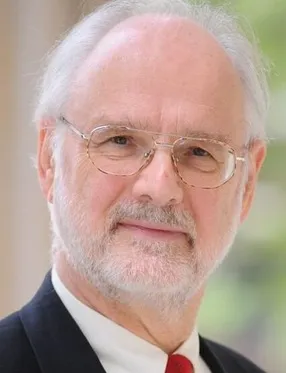
Karl P. Sauvant is a Senior Fellow at CCSI. In addition to his research at the Center, he is Co-chair of the CONNEX Advisory Committee, Senior International Consultant for the International Trade Centre, Fellow at the Academy of International Business and Honorary Fellow at the European International Business Academy. He was the Founding Executive Director of CCSI (previously the Vale Columbia Center on Sustainable International Investment) until February 2012. While in this role, he launched the Yearbook on International Investment Law and Policy, the Columbia FDI Perspectives, the Columbia FDI Profiles, the annual Columbia International Investment Conference, the Investment Law and Policy Speaker Series, and the Emerging Markets Global Players project. Between 2006 and 2023, he taught a seminar on “FDI and Public Policy” at Columbia Law School. He has published widely in the international investment area. Until October 2011, he was also the Co-Director of the Millennium Cities Initiative at the Earth Institute, responsible for helping African cities attract investment. Prior to his time with CCSI, he served as the Director of the United Nations Conference on Trade and Development's (UNCTAD’s) Investment Division, the focal point in the UN system for matters related to FDI, as well as a major interface with the private sector. While at the UN, he created (in 1991) the prestigious annual World Investment Report, of which he was the lead author until 2004. In 1992, he founded the journal Transnational Corporations, serving as its editor until 2005. He provided intellectual leadership and guidance to a series of 25 monographs on key issues related to international investment agreements, which were published in 2004/05 in three volumes. His name is associated with a great number of United Nations publications on FDI over his three decades of service in the UN. He holds a Bachelor's equivalent from the Freie Universität Berlin (Germany), a Master's degree from the University of Pennsylvania, Philadelphia, and received his Ph.D. degree in International Relations in 1975 from the University of Pennsylvania.
Jérôme Schmitt
Jérôme Schmitt has more than 30 years of experience in the worlds of energy and mobility, all along their value chain, mostly across finance, sustainability and low-carbon business streams. He is currently chairman of C-4WARD, an advisory firm dedicated to accelerating transitions, working with a selected number of world-scale investment funds, major global institutions and initiatives, and start-ups on their energy transition and sustainability journey. Previously he was Chief Sustainability Officer of TotalEnergies (2013-2016) and, ahead of Cop 21, led the creation of the Oil & Gas Climate Initiative (OGCI) and its 1B US $ Climate Fund (CI). He also created and led the Net Zero Businesses division of TotalEnergies (2016-2019) as well as its dedicated Net Zero Venture fund. In parallel he was chairman of OGCI Executive Committee until 2021, developing, together with the member companies, the first joint Climate and Net Zero road maps of the Industry. He has also been Head of IR (2004-2009), Group Treasurer and Head of Financing (2009-2012), and Head of M&A (2019-2021) of TotalEnergies.
Robert van Zwieten
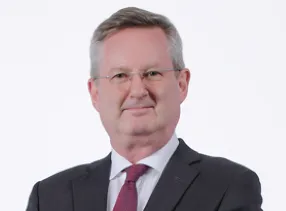
Robert van Zwieten’s professional experience spans global financial markets, emerging markets investing, sustainable development, just energy transition, and governance. He is a Founding Partner of Route17, an advisory collaborative working with asset owners, asset managers, and multilateral organizations on SDG finance, climate finance, blended finance, private capital mobilization into development, and creating new markets. He is also a Fellow of the Climate Policy Initiative, a Senior Advisor to the Global Innovation Lab for Climate Finance, and an Ambassador of the World Benchmarking Alliance. He also serves on three corporate boards and is an advisor to several private capital investment funds in Asia and Africa focused on climate and gender. He is a Senior Advisor to the Blended Finance Lab at the London School of Economics and Political Science, and a Fellow of the Transition Investment Lab (TIL) at New York University Stern School Abu Dhabi. He is a recognized thought leader in sustainable finance and has co-authored articles about sovereign wealth funds and blended finance. He was the President and CEO of EMPEA (renamed GPCA), the global industry association for private capital in emerging markets, representing an aggregate $5 trillion in AUM. Before this, he served as a Director of the Private Sector Capital Markets Division at Asian Development Bank. This followed more than two decades in senior executive positions in global financial markets in Europe, the United States, and Asia, successively with firms such as ABN AMRO Bank, GE Capital and GE Energy, Lehman Brothers, and Singapore Exchange. He holds his MBA degree from University of Chicago Booth School of Business, his LL.M. degree from Columbia Law School, and his JD and MA degrees from Leiden University in the Netherlands. A dual citizen of the US and the Netherlands, he currently lives in, and works from, the Philippines.
Ajay Jagdish (SDG-Aligned Business & Finance)
Celine Yan Wang (Investment Law and Policy)
Anar Amarjargal (Land, Agriculture & Food Systems)
Manuel Beltrán (Mining & Climate)
Chimi Dorji (Just Energy Transitions)
Valentina Fontana (Sustainable Finance)
Danielle Fujimoto (Sustainable Business)
Aniruddha Jaydeokar (Mining & Energy)
Aliyya Laksmiandari (Just Energy Transitions)
Ananya Mathur (Just Energy Transitions)
Shunta Ofusa (Mining & Energy)
Jinhyun Aron Park (Just Energy Transitions)
Ashwini Ramanathan (Land, Agriculture & Food Systems)
Carlos Ivan Aguilar Rocha (Sustainable Finance)
Maria Cecilia Chacon Rendon (Investment Law & Policy)
María Alejandra Salamanca (Investment Law & Policy)
Hans Wibisono Sutikno (Sustainable Finance)
Eszter Varga (Land, Agriculture & Food Systems)
Alexandra Westfall (Just Energy Transitions)
Christy Wong (Sustainable Finance)
Muhamad Ababil Akram, Executive Trainings Operations Assistant
Helena Fu, Strategy and Development Operations Assistant
Laura Huepenbecker, Strategy and Development Operations Assistant
Mariam Kuyateh, Communications Associate Intern
Mikaela Lessnau, Operations/Admin Assistant
Xinyi Lian, Operations Assistant, ARIES
Antonio Mochmann, Communications Support
Tina Nguyen, Operations Assistant